
Wool carding is a key process in the preparation of fibers for spinning, where raw wool is opened, cleaned, and aligned into a uniform sliver. In this process, fibers pass through a series of rollers covered with fine wire teeth, which disentangle, straighten, and remove impurities from the wool. This ensures proper fiber orientation and consistency, which are essential for producing high-quality yarn.
The carded wool is delivered in the form of sliver, which is then suitable for further spinning processes. This stage plays a crucial role in determining the strength, uniformity, and overall quality of the final yarn.
Our facility is equipped with modern wool carding machines and skilled operators to maintain high standards of fiber preparation and production efficiency.
Installed Capacity: 7 Wool Card Machines
Production Capacity:
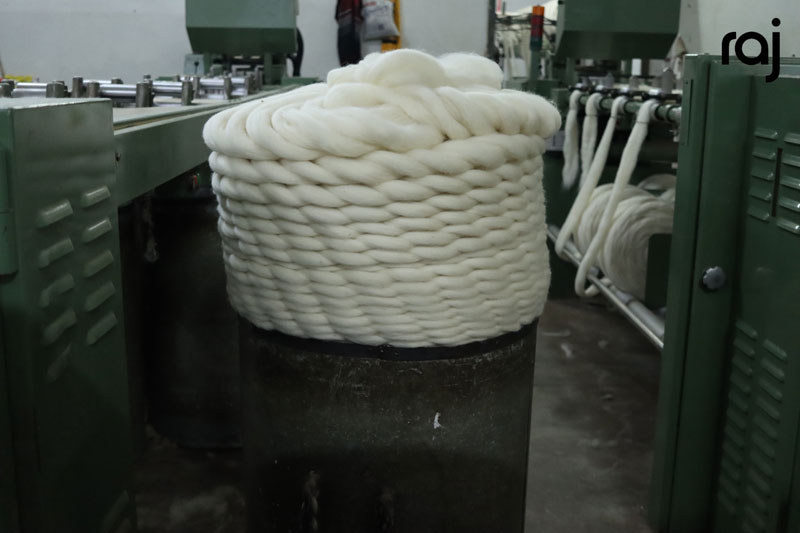
PET carding is an essential process in the preparation of polyester fibers for spinning, where fibers are opened, cleaned, and aligned into a uniform sliver. The process involves passing fibers through a series of carding rollers equipped with fine metallic wires that disentangle and straighten the fibers while removing impurities. This ensures consistent fiber orientation and improved yarn quality in subsequent processes.
Our PET carding unit is equipped with advanced machines designed to handle different types of polyester fibers with high efficiency and precision, ensuring uniform sliver formation and optimal productivity.
Installed Capacity:
Production Capacity:
Approx. Total Production Capacity:
Based on machine type and yarn mix, the unit is capable of producing a significant daily output with consistent quality standards.
PET spinning is a crucial process in the conversion of polyester (PET) fibers into yarn, where the prepared sliver from the carding section is drawn and twisted to achieve the desired yarn count, strength, and uniformity. This process ensures that the fibers are properly aligned and bonded together to form a continuous and durable yarn suitable for various textile applications.
In this process, the sliver is passed through drafting systems that reduce its thickness while improving fiber alignment. It is then subjected to controlled twisting, which imparts strength and cohesion to the yarn. The final yarn is wound onto bobbins or cones for further use in weaving, knitting, or other downstream processes.
Our PET spinning unit is equipped with modern machinery and skilled operators to maintain consistent yarn quality, precise count control, and efficient production. The setup is capable of handling different yarn specifications to meet diverse customer requirements while ensuring high productivity and minimal wastage
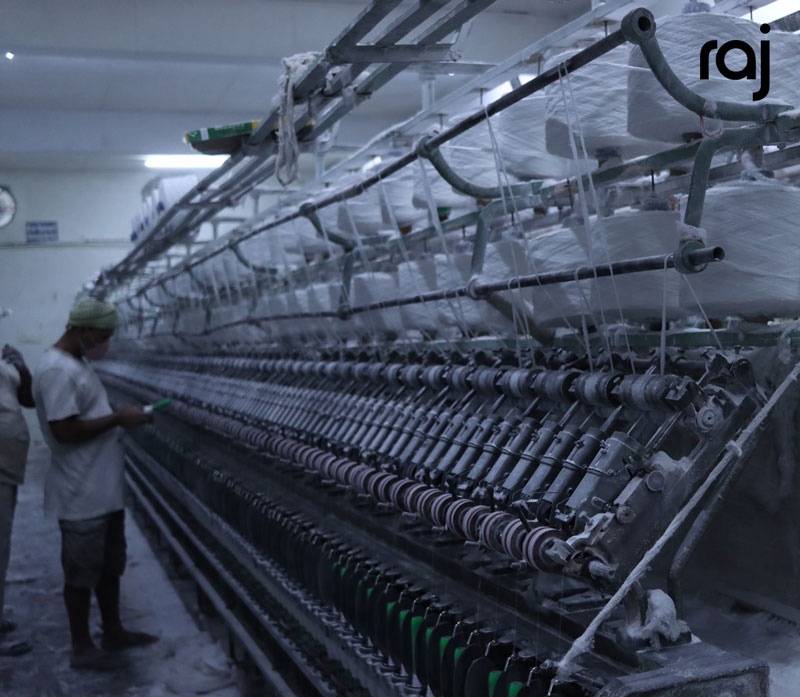
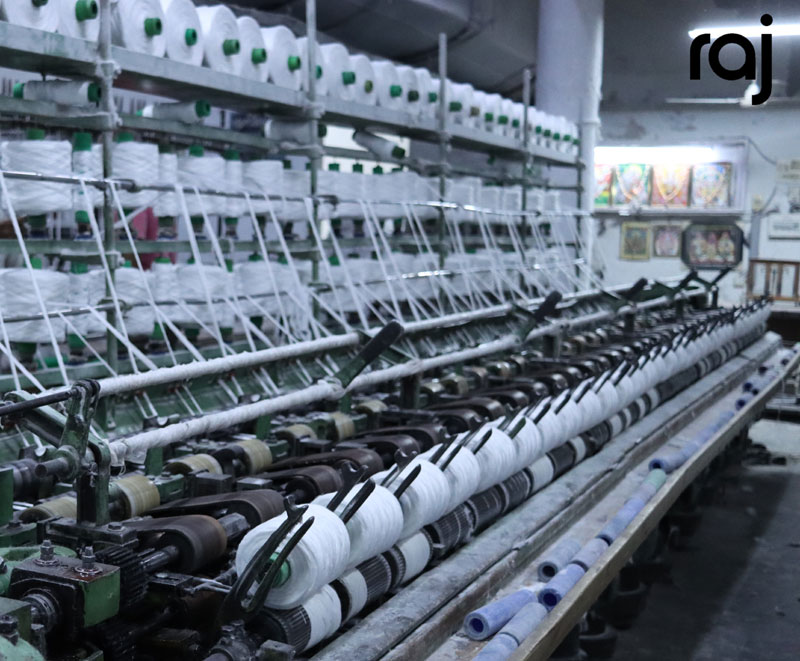
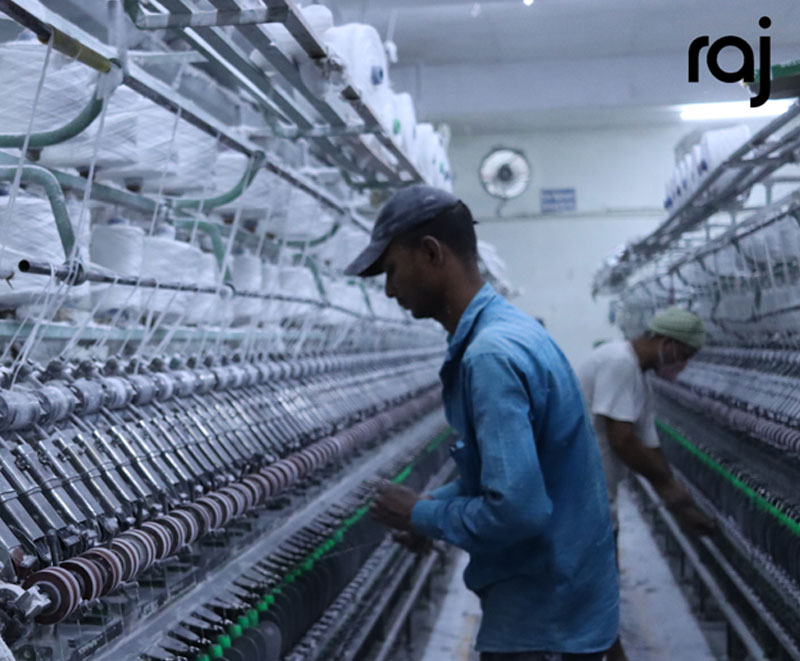
Wool spinning is a vital process in the transformation of carded wool fibers into strong, uniform yarn suitable for various textile applications. In this stage, the sliver obtained from the wool carding process is further processed through drafting and twisting to achieve the desired yarn count, strength, and evenness.
The process involves passing the wool sliver through a series of drafting rollers, which attenuate the material and align the fibers more precisely. Controlled twisting is then applied to bind the fibers together, imparting the necessary strength and durability to the yarn. The spun yarn is subsequently wound onto bobbins or cones for ease of handling and further processing such as weaving or knitting.
Our wool spinning unit is equipped with advanced machinery and experienced operators to ensure consistent yarn quality, uniform thickness, and high production efficiency. The system is capable of producing a wide range of yarn counts as per customer requirements while maintaining strict quality standards.

 TUFTED CARPETS
 HANDWOVEN CARPETS
 KILIMS
 FURNITURE
 CUSHIONS & PILLOWS
 POUFS
 WALL ART
 BEDDING
 DOORMATS